.png)
Exploring Advanced Drone Defense Technologies

Unmanned aerial systems, commonly known as drones, have become increasingly accessible and versatile. While they offer numerous benefits across industries, they also pose significant security challenges. Unauthorized drone activity can threaten public safety, disrupt critical infrastructure, and compromise sensitive events. To address these risks, advanced drone defense technologies have emerged as essential tools for maintaining control over restricted airspace.
This article explores the latest developments in drone defense, focusing on practical applications and operational value. It aims to provide clear, actionable insights for public safety agencies, event security teams, emergency responders, and infrastructure managers tasked with protecting their airspace from drone threats.
Understanding Advanced Drone Defense Systems
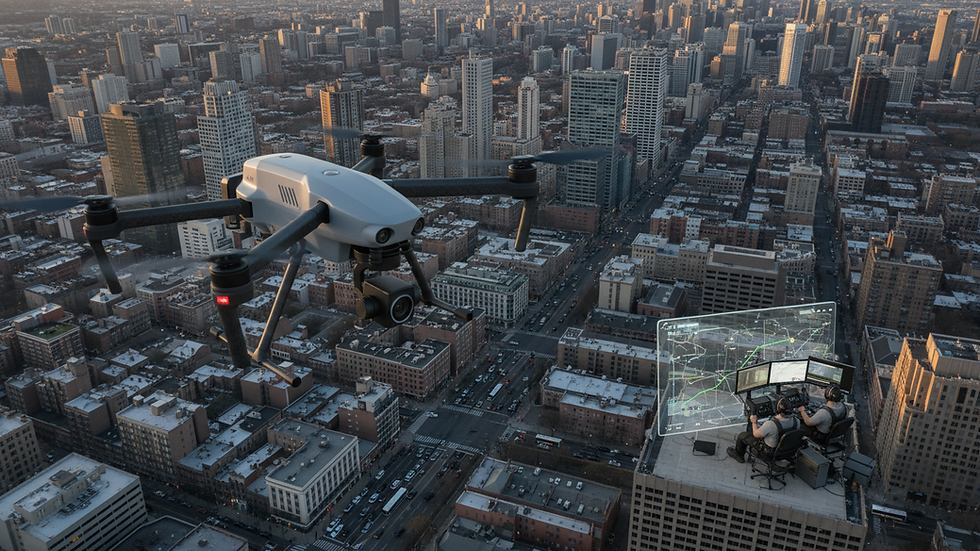
Advanced drone defense systems combine detection, identification, tracking, and mitigation capabilities to provide comprehensive airspace security. These systems are designed to detect unauthorized drones early, assess their intent, and enable timely response actions.
Key components of advanced drone defense include:
Radar and Radio Frequency (RF) Detection: These sensors scan the airspace to detect drone signals or physical movement. Radar systems provide wide-area coverage, while RF sensors identify communication links between drones and their operators.
Electro-Optical and Infrared Cameras: Visual and thermal imaging help confirm drone presence and track their flight paths, even in low-light conditions.
Data Fusion and Analytics: Integrating data from multiple sensors enhances situational awareness and reduces false alarms.
Mitigation Tools: Once a threat is confirmed, mitigation options such as signal jamming, drone capture nets, or directed energy systems can be deployed to neutralize the drone safely.
These technologies work together to create a layered defense that supports rapid decision-making and operational control.

The Role of Advanced Drone Defense in Operational Security
Advanced drone defense plays a critical role in protecting sensitive locations and events. For example, airports face risks from drones interfering with aircraft operations, while public gatherings require protection from potential surveillance or malicious drone activity.
Operational benefits include:
Real-Time Awareness: Continuous monitoring provides immediate alerts about drone incursions, allowing security teams to respond proactively.
Risk Reduction: Early detection minimizes the chance of drone-related accidents or security breaches.
Enhanced Decision-Making: Clear, actionable intelligence supports coordinated responses between multiple agencies or teams.
Compliance and Legal Considerations: Advanced systems help ensure that drone mitigation actions comply with regulatory frameworks and respect privacy concerns.
For instance, during large-scale events, security personnel can use these systems to monitor airspace and coordinate with law enforcement to intercept unauthorized drones before they pose a threat.
Is there anti-drone technology?
Yes, anti-drone technology encompasses a range of tools designed to counter unauthorized drone activity. These technologies are integral to advanced drone defense systems and include:
Signal Jamming: Disrupts the communication link between the drone and its operator, forcing the drone to land or return to its point of origin.
Drone Capture Devices: Nets or other physical capture methods can safely bring down drones without causing collateral damage.
Directed Energy Weapons: Emerging technologies use focused energy beams to disable drones’ electronics or propulsion systems.
Geofencing and Drone Identification: Some systems enforce virtual boundaries that prevent drones from entering restricted zones or identify drones based on their digital signatures.
Each method has operational considerations, such as legal restrictions and potential interference with other communications. Therefore, selecting the appropriate anti-drone technology requires careful assessment of the specific threat environment and mission objectives.

Practical Recommendations for Implementing Drone Defense
Implementing an effective drone defense strategy involves several key steps:
Conduct a Risk Assessment: Identify critical assets, potential drone threat scenarios, and vulnerabilities in your airspace.
Select Appropriate Detection Technologies: Choose sensors that provide reliable coverage for your operational environment, considering factors like terrain, weather, and expected drone types.
Integrate Systems for Data Fusion: Combine inputs from radar, RF, and optical sensors to improve detection accuracy and reduce false positives.
Develop Response Protocols: Establish clear procedures for threat verification, escalation, and mitigation actions, ensuring compliance with local laws.
Train Personnel: Equip security teams with the knowledge and skills to operate drone defense systems effectively and interpret alerts.
Maintain and Update Systems: Regularly test and update hardware and software to adapt to evolving drone technologies and tactics.
By following these steps, organizations can build a resilient drone defense posture that enhances situational awareness and operational control.
Future Trends in Drone Defense Technology
The landscape of drone threats and countermeasures is rapidly evolving. Future advancements in drone defense technology are expected to focus on:
Artificial Intelligence and Machine Learning: Enhancing detection algorithms to better distinguish between drones and other airborne objects, and to predict drone behavior.
Autonomous Response Systems: Enabling automated mitigation actions that reduce response times and human error.
Improved Integration with Air Traffic Management: Facilitating coordination between drone defense systems and manned aircraft control to ensure safe airspace management.
Miniaturization and Portability: Developing compact, mobile systems that can be quickly deployed in diverse operational settings.
Staying informed about these trends will help security professionals anticipate new challenges and opportunities in drone defense.
Building Trust Through Reliable Drone Defense Solutions
Effective drone defense is not just about technology - it is about building trust and confidence in airspace security. Reliable systems that provide real-time awareness and operational control empower security teams to act decisively and protect critical assets.
Organizations should prioritize solutions that are:
Easy to Deploy and Use: Minimizing complexity ensures rapid adoption and effective use in high-pressure situations.
Scalable and Flexible: Adapting to different environments and threat levels supports long-term security goals.
Compliant with Regulations: Respecting legal frameworks and privacy concerns maintains public trust and avoids operational risks.
By focusing on these principles, drone defense technologies can become trusted tools that enhance safety and security across a wide range of applications.
For more detailed information on drone defense technology, visit Aerial Defense Systems' official site.
Advanced drone defense technologies represent a critical evolution in protecting airspace from unauthorized and potentially dangerous drone activity. Through integrated detection, identification, and mitigation capabilities, these systems provide the situational awareness and operational control necessary to safeguard public safety, infrastructure, and events. As drone threats continue to evolve, so too must the strategies and technologies used to counter them, ensuring a safer and more secure airspace for all.


Comments