.png)
Remote ID Drone Tracker Devices Explained: A Comprehensive Drone Remote Identification Tool

Unmanned aerial systems (UAS), commonly known as drones, have become ubiquitous across many sectors. While their benefits are clear, the increasing presence of drones in sensitive airspace poses significant challenges for public safety and security professionals. Understanding and managing drone activity is critical to maintaining operational control and protecting critical infrastructure. This is where a drone remote identification tool plays a vital role.
This article provides an in-depth explanation of remote ID drone tracker devices, their operational value, and practical guidance for agencies tasked with airspace security. It emphasizes real-world use cases and the importance of reliable, real-time drone awareness.
Understanding the Drone Remote Identification Tool
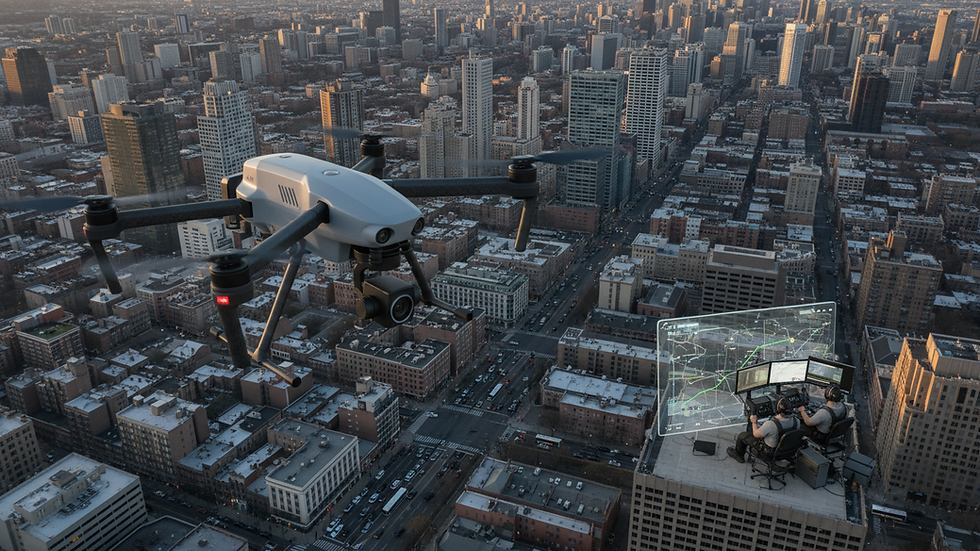
A drone remote identification tool is designed to detect and identify drones operating within a specific airspace. These tools leverage Remote ID technology, which is a system that broadcasts identification and location information from drones to authorized receivers on the ground.
Remote ID is mandated by regulatory authorities to enhance transparency and accountability in drone operations. It enables security teams to:
Identify drone operators quickly
Assess potential threats based on drone behavior and location
Coordinate timely responses to unauthorized or suspicious drone activity
The drone remote identification tool integrates multiple detection methods, including radio frequency (RF) scanning, radar, and visual tracking, to provide a comprehensive picture of drone activity. This multi-layered approach ensures that even drones without Remote ID broadcasts can be detected and tracked.

The Importance of Drone Remote Identification Tool in Security Operations
For public safety agencies, event security teams, and critical infrastructure operators, maintaining situational awareness of drone activity is essential. Unauthorized drones can disrupt emergency response, compromise event safety, or threaten sensitive sites such as airports, power plants, and government buildings.
A drone remote identification tool offers several operational advantages:
Real-time awareness: Immediate detection and identification of drones allow security personnel to make informed decisions quickly.
Enhanced safety: Knowing the drone’s operator and flight path reduces the risk of collisions or interference with manned aircraft.
Legal compliance: Remote ID supports enforcement of no-fly zones and restricted airspace regulations.
Incident investigation: Recorded data from drone tracking devices can assist in post-incident analysis and prosecution.
For example, during large public events, security teams can monitor drone activity to prevent unauthorized aerial photography or potential threats. Similarly, airport security can use these tools to detect drones that may interfere with aircraft operations, ensuring passenger safety.
How to track drone Remote ID?
Tracking drone Remote ID involves receiving and interpreting the broadcast signals emitted by compliant drones. These signals typically include:
Drone identification number
Location coordinates (latitude, longitude, altitude)
Velocity and heading
Control station location
To track these signals effectively, agencies deploy specialized receivers that scan the airspace for Remote ID broadcasts. These receivers can be standalone devices or integrated into broader drone detection systems.
The process includes:
Signal detection: The receiver scans for Remote ID transmissions within its range.
Data decoding: The broadcast data is decoded to extract drone identification and flight information.
Real-time display: The information is presented on a user interface, showing drone location and movement.
Alerting: If a drone enters a restricted area or exhibits suspicious behavior, the system can trigger alerts for immediate response.
In addition to Remote ID broadcasts, some systems incorporate radar and optical sensors to detect drones that do not comply with Remote ID requirements. This layered detection ensures comprehensive coverage and reduces blind spots.

Practical Use Cases for Remote ID Drone Tracker Devices
The operational value of remote ID drone tracker devices is best understood through real-world scenarios:
Law enforcement: Police departments use these tools to identify drones involved in illegal surveillance or smuggling operations. Rapid identification helps in deploying countermeasures or apprehending operators.
Event security: Organizers of concerts, sports events, and public gatherings monitor drone activity to prevent unauthorized recordings or potential threats to crowd safety.
Emergency response: Firefighters and disaster management teams track drones to avoid interference with aerial firefighting or search and rescue missions.
Critical infrastructure protection: Operators of power plants, water treatment facilities, and communication hubs use drone detection to safeguard against espionage or sabotage attempts.
Airport security: Airports deploy remote ID drone tracker devices to detect drones that could disrupt flight operations, ensuring compliance with no-fly zones.
Each use case highlights the importance of timely, accurate drone identification and tracking to maintain control over the airspace and mitigate risks.
Implementing Remote ID Drone Tracker Devices: Best Practices
Deploying a remote ID drone tracker device effectively requires careful planning and integration into existing security protocols. Consider the following recommendations:
Assess airspace risk: Identify critical zones where drone activity poses the highest risk, such as event venues, infrastructure sites, or emergency operation areas.
Select appropriate technology: Choose detection systems that combine Remote ID receivers with radar and optical sensors for comprehensive coverage.
Train personnel: Ensure security teams understand how to interpret drone data and respond to alerts promptly.
Establish response protocols: Define clear procedures for engaging with drone operators or initiating countermeasures when unauthorized drones are detected.
Maintain system updates: Keep detection software and hardware updated to comply with evolving regulations and technology standards.
Coordinate with authorities: Work closely with aviation regulators and law enforcement to share drone activity data and support enforcement actions.
By following these best practices, agencies can maximize the operational benefits of drone remote identification tools and enhance airspace security.
Enhancing Airspace Security with Trusted Drone Detection Solutions
The growing presence of drones in sensitive airspace demands reliable and effective detection capabilities. A remote ID drone tracker device provides the essential functionality needed to identify, track, and respond to drone activity in real time.
By integrating these tools into security operations, agencies gain:
Increased situational awareness
Improved risk management
Faster, more informed decision-making
Aerial Defense Systems (ADS) is committed to supporting public safety agencies, event organizers, and critical infrastructure operators with easy-to-deploy drone detection solutions. These solutions empower teams to maintain operational control, reduce drone-related risks, and protect the airspace effectively.
Understanding and leveraging drone remote identification technology is a critical step toward safer skies and more secure operations.


Comments