.png)
Innovative Drone Solutions for Modern Needs

Drones have become indispensable tools in enhancing operational efficiency and safety across various sectors. From law enforcement to critical infrastructure management, the ability to detect, track, and respond to drone activity is crucial. As drone technology evolves, so do the challenges associated with unauthorized or malicious drone use. Addressing these challenges requires innovative approaches that prioritize real-time awareness, operational control, and risk reduction.
The Role of Innovative Drone Solutions in Public Safety and Security
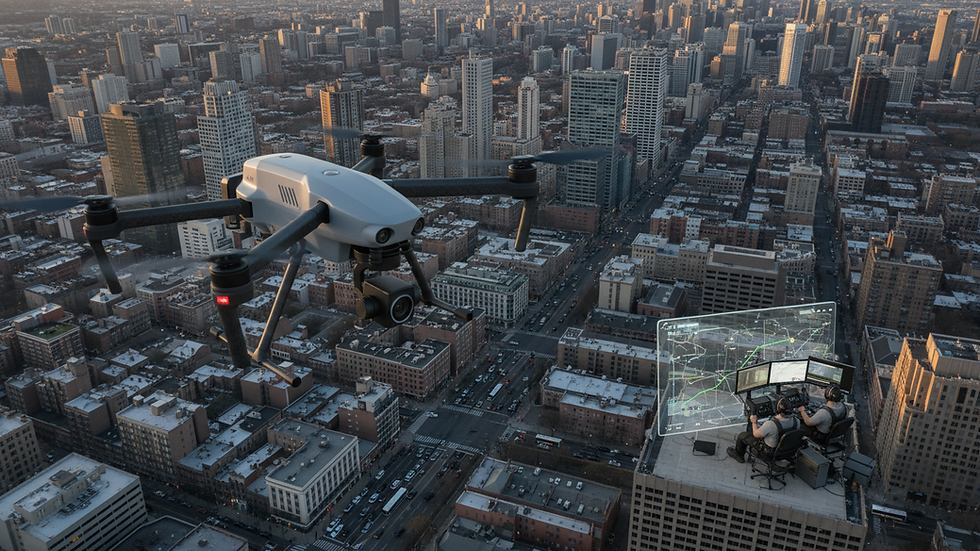
Modern security environments demand more than traditional surveillance methods. Innovative drone solutions provide a tactical advantage by offering comprehensive airspace awareness. These systems enable agencies to monitor drone activity proactively, identify potential threats, and respond swiftly.
For example, during large public events, drones can pose risks ranging from privacy violations to potential attacks. Deploying advanced detection systems allows security teams to maintain a secure perimeter and ensure public safety. Similarly, critical infrastructure operators benefit from continuous drone monitoring to prevent unauthorized surveillance or interference.
Key benefits of these solutions include:
Real-time detection and tracking of drones entering restricted airspace
Automated alerts to security personnel for rapid response
Integration with existing security infrastructure for seamless operations
Scalable deployment adaptable to various environments and threat levels

Understanding the Operational Value of Drone Detection Systems
Operational control is paramount when managing drone threats. Innovative drone solutions provide actionable intelligence that supports decision-making in dynamic situations. These systems combine radar, radio frequency (RF) detection, and optical sensors to create a multi-layered defense.
For instance, emergency responders can use these systems to secure disaster zones from unauthorized drone interference, which could hamper rescue efforts. Law enforcement agencies gain enhanced situational awareness during tactical operations, reducing the risk of surprise drone incursions.
Practical recommendations for maximizing operational value include:
Deploy multi-sensor detection platforms to improve accuracy and reduce false alarms
Train personnel on interpreting drone data to enable swift, informed decisions
Establish clear protocols for drone threat response to maintain operational consistency
Regularly update detection software to keep pace with evolving drone technologies

What is the 80 20 Rule for Drones?
The 80 20 rule, often applied in various operational contexts, suggests that 80% of drone-related incidents can be addressed by focusing on 20% of the most critical threats or vulnerabilities. In drone management, this means prioritizing resources and attention on the most likely or impactful drone threats.
For example, focusing on drones operating near sensitive infrastructure or large public gatherings can mitigate the majority of risks. This approach allows agencies to allocate their detection and response capabilities efficiently without overextending resources.
Implementing the 80 20 rule involves:
Identifying high-risk zones based on historical data and threat assessments
Concentrating detection efforts on these priority areas
Developing targeted response plans for the most probable drone threat scenarios
Continuously reviewing and adjusting priorities as new intelligence emerges
This strategic focus enhances overall airspace security while optimizing operational costs and personnel deployment.
Real-World Use Cases Demonstrating Tactical Drone Response
Several real-world scenarios highlight the importance of reliable drone detection and response systems. For example, during a major sporting event, security teams detected an unauthorized drone attempting to breach the airspace. The system’s early warning allowed for immediate intervention, preventing potential disruption or harm.
In another case, a power plant operator used drone detection technology to identify a drone conducting unauthorized surveillance. The operator coordinated with law enforcement to intercept the drone, safeguarding critical infrastructure from potential espionage or sabotage.
These examples underscore the necessity of:
Rapid identification of drone threats before they escalate
Coordinated response protocols involving multiple agencies
Continuous monitoring to maintain situational awareness throughout operations
Such operational readiness is essential for maintaining safety and security in complex environments.
Enhancing Airspace Protection with Trusted Tactical Solutions
Effective airspace protection depends on trust in the technology and its operators. Systems must be reliable, easy to deploy, and capable of integrating with existing security frameworks. Aerial Defense Systems (ADS) exemplifies this approach by providing solutions tailored to the needs of public safety agencies, event security teams, and infrastructure managers.
ADS solutions emphasize:
User-friendly interfaces that simplify drone detection and tracking
Scalable systems adaptable to various operational scales and environments
Comprehensive training and support to empower security personnel
Continuous innovation to address emerging drone threats
By focusing on these elements, ADS helps organizations maintain control over their airspace, reduce risks, and make safer decisions.
For those seeking to enhance their operational capabilities, exploring drone solutions that prioritize real-time awareness and operational control is a critical step.
Innovative drone solutions are no longer optional but essential components of modern security and safety strategies. By adopting advanced detection and response systems, organizations can effectively manage drone threats, protect critical assets, and ensure public safety with confidence.


Comments