.png)
Effective Counter-Drone Strategies: Enhancing Security with Tactical Solutions

Unmanned aerial systems, commonly known as drones, have become increasingly accessible and versatile. While they offer numerous benefits across industries, their misuse poses significant security challenges. Unauthorized drone activity can threaten public safety, disrupt critical infrastructure, and compromise sensitive events. Addressing these risks requires a comprehensive approach to drone detection and response.
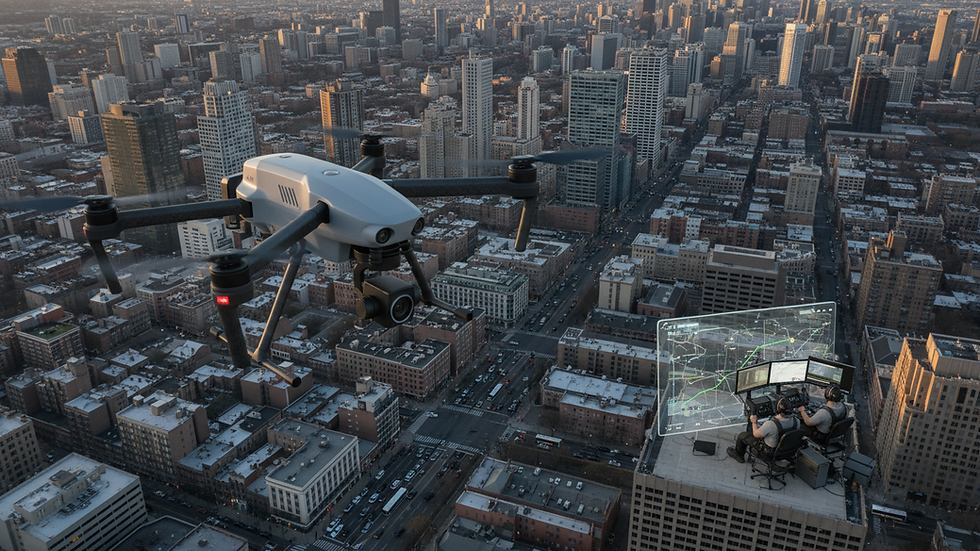
This article explores effective counter-drone strategies designed to provide real-time awareness and operational control. It focuses on practical, mission-driven solutions that empower security professionals to mitigate drone threats efficiently and safely.
Understanding the Drone Threat Landscape
Drones can be exploited for various malicious purposes, including surveillance, smuggling, and even direct attacks. Public safety agencies and security teams face evolving challenges as drone technology advances and becomes more affordable.
Common threat scenarios include:
Unauthorized surveillance of sensitive sites such as government buildings, airports, or critical infrastructure.
Disruption of public events through drone interference or potential delivery of hazardous materials.
Smuggling contraband into correctional facilities or restricted zones.
Interference with emergency response operations, complicating rescue or firefighting efforts.
Each scenario demands tailored countermeasures that prioritize safety, legality, and operational effectiveness.

Counter-Drone Strategies for Enhanced Security
Effective counter-drone strategies combine detection, identification, tracking, and mitigation technologies. These elements work together to provide a layered defense that enhances situational awareness and supports informed decision-making.
Detection and Identification
Early detection is critical. Systems that use radar, radio frequency (RF) analysis, acoustic sensors, and electro-optical/infrared (EO/IR) cameras can identify drones at various distances and altitudes. Combining multiple sensor types improves accuracy and reduces false alarms.
Radar systems detect drone movement and provide range and speed data.
RF sensors analyze communication signals between drones and their operators.
Acoustic sensors pick up drone-specific sound signatures.
EO/IR cameras offer visual confirmation and tracking, even in low light.
Tracking and Classification
Once detected, drones must be tracked continuously to assess their trajectory and intent. Advanced software platforms integrate sensor data to classify drones by type, size, and behavior patterns. This information helps security teams prioritize responses based on threat level.
Mitigation Techniques
Mitigation involves neutralizing or disrupting unauthorized drones safely and legally. Common methods include:
Jamming RF signals to sever communication between the drone and its operator.
Spoofing GPS signals to redirect drones away from sensitive areas.
Kinetic solutions such as nets or trained birds of prey, though these require careful deployment to avoid collateral damage.
Legal and regulatory considerations are paramount. Mitigation actions must comply with local laws and respect privacy and safety standards.
Real-World Applications of Counter-Drone Solutions
Several sectors have successfully integrated counter-drone strategies to protect assets and people.
Public Safety and Emergency Response
During large-scale events or emergencies, drones can interfere with operations or pose safety risks. Deploying detection systems around event perimeters or incident sites enables rapid identification of unauthorized drones. This real-time awareness allows responders to adjust tactics and maintain control of the airspace.
Critical Infrastructure Protection
Facilities such as power plants, water treatment centers, and transportation hubs are attractive targets for drone-based threats. Continuous monitoring with integrated sensor arrays helps detect suspicious drone activity early. Security teams can then implement mitigation protocols to prevent disruptions or damage.
Airport Security
Airports face unique challenges due to the potential for drones to interfere with aircraft operations. Counter-drone systems installed around runways and air traffic zones provide early warnings and support coordinated responses with aviation authorities.

Implementing Reliable Drone Mitigation Solutions
Selecting and deploying effective drone mitigation solutions requires a clear understanding of operational needs and constraints. Key considerations include:
Scalability: Systems should be adaptable to different site sizes and threat levels.
Ease of deployment: Rapid installation and minimal disruption are essential, especially for temporary events.
Integration: Compatibility with existing security infrastructure enhances overall effectiveness.
User interface: Intuitive controls and clear alerts support quick decision-making.
Compliance: Solutions must adhere to legal frameworks governing drone countermeasures.
Training personnel on system operation and response protocols is equally important. Regular drills and scenario planning improve readiness and confidence.
For organizations seeking dependable options, drone mitigation solutions that combine detection and tactical response capabilities offer a comprehensive approach to airspace security.
Building Trust Through Operational Control and Awareness
Trust in counter-drone technology stems from consistent performance and transparent communication. Security teams must have confidence that their systems provide accurate, timely information without overwhelming operators with false positives.
Operational control is enhanced by:
Centralized command interfaces that consolidate sensor data.
Automated alerts tailored to threat severity.
Detailed reporting for post-incident analysis and continuous improvement.
By fostering real-time awareness and control, these solutions empower security professionals to act decisively and maintain safe environments.
Effective counter-drone strategies are essential for safeguarding people, property, and critical operations. Through a combination of advanced detection, precise tracking, and responsible mitigation, security teams can address drone threats proactively. Investing in reliable, easy-to-use systems supports mission success and reinforces public safety in an increasingly complex airspace.


Comments