.png)
Beginner Drone Detection Kit Essentials for Public Safety and Security

Unmanned aerial vehicles (UAVs), commonly known as drones, have become increasingly accessible and prevalent. While drones offer many benefits, they also pose significant risks to public safety, critical infrastructure, and event security. Unauthorized drone activity can disrupt emergency response, compromise secure areas, and create hazards in crowded environments. To address these challenges, organizations need reliable tools to detect, track, and assess drone threats in real time.
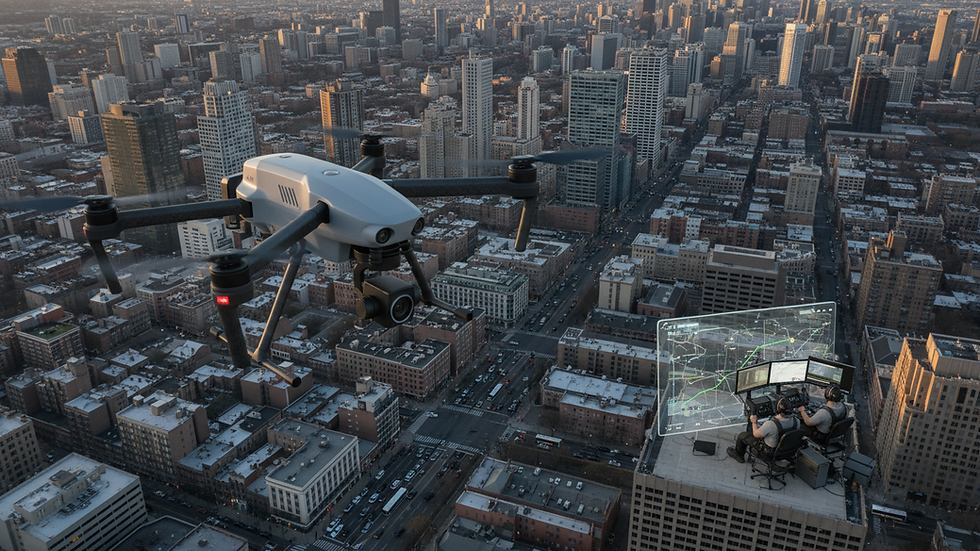
A beginner drone detection kit provides a foundational solution for agencies and security teams to gain situational awareness and operational control over their airspace. This article outlines the essential components and practical considerations for assembling an effective starter kit. It emphasizes real-world use cases, operational value, and straightforward guidance to support mission-critical decisions.
Understanding the Need for a Beginner Drone Detection Kit
Drones can be used maliciously or unintentionally to interfere with public safety operations. Examples include:
Unauthorized drones flying near airports, risking collisions with manned aircraft.
Drones disrupting large public events, creating safety hazards.
Surveillance drones gathering sensitive information near critical infrastructure.
Drones interfering with firefighting or emergency response efforts.
These scenarios demand rapid detection and response capabilities. A beginner drone detection kit equips teams with the tools to identify drone presence early, track their movements, and assess potential threats. This capability enhances situational awareness and enables timely, informed actions to mitigate risks.
Key Components of a Beginner Drone Detection Kit
An effective starter kit combines multiple technologies to provide comprehensive drone detection and tracking. The following components are essential:
1. Radio Frequency (RF) Detection
Most consumer and commercial drones communicate via radio frequencies. RF detection systems scan the airspace for drone control signals and telemetry. This allows early identification of drone activity, even if the drone is not visible.
Benefits: Detects drones beyond visual range, identifies drone models and controllers.
Limitations: May miss drones operating on non-standard frequencies or in autonomous mode.
2. Radar Detection
Radar systems emit radio waves and analyze reflections to detect flying objects. Radar can provide range, altitude, and speed data for drones.
Benefits: Works in all weather conditions, detects non-communicating drones.
Limitations: Smaller drones may have a low radar cross-section, requiring sensitive equipment.
3. Optical and Infrared Cameras
Visual and thermal cameras provide real-time imagery to confirm drone presence and track movement.
Benefits: Enables visual identification, supports operator verification.
Limitations: Limited by line of sight and lighting conditions.
4. Centralized Command and Control Software
A unified interface integrates data from RF, radar, and cameras to provide a comprehensive airspace picture. This software supports alerting, logging, and decision-making.
Benefits: Simplifies monitoring, improves response coordination.
Limitations: Requires trained personnel for effective use.

Practical Deployment Considerations for a Beginner Drone Detection Kit
Deploying a drone detection system requires careful planning to maximize effectiveness and operational value. Key considerations include:
Site Assessment
Identify critical zones requiring protection, such as event venues, infrastructure sites, or emergency staging areas.
Evaluate terrain, obstructions, and typical drone flight paths.
Determine optimal sensor placement for maximum coverage.
Integration with Existing Security Systems
Coordinate drone detection with physical security, access control, and communication networks.
Establish protocols for alert escalation and response.
Training and Standard Operating Procedures
Train personnel on system operation, threat assessment, and response actions.
Develop clear procedures for drone incident management, including law enforcement notification.
Scalability and Flexibility
Choose modular systems that can expand as operational needs grow.
Ensure compatibility with future technology upgrades.
Real-World Use Cases Demonstrating Operational Value
Understanding how a beginner drone detection kit supports mission objectives is critical. Here are examples illustrating its impact:
Event Security
At large public gatherings, unauthorized drones can disrupt operations or endanger attendees. Early detection allows security teams to:
Alert event managers and law enforcement.
Implement temporary flight restrictions.
Deploy countermeasures if authorized.
Critical Infrastructure Protection
Facilities such as power plants, water treatment centers, and communication hubs are vulnerable to drone surveillance or interference. Detection systems enable:
Continuous monitoring of restricted airspace.
Rapid identification of suspicious drone activity.
Documentation for investigative and legal purposes.
Emergency Response Support
During firefighting or disaster relief, drones can interfere with aircraft and personnel. Detection kits help responders:
Maintain safe airspace coordination.
Prevent drone-related accidents.
Focus resources on mission-critical tasks.

Building Trust Through Reliable Drone Detection Solutions
Effective drone detection is not just about technology - it is about trust, real-time awareness, and operational control. Public safety and security teams rely on dependable systems that deliver accurate information without overwhelming operators.
A well-designed beginner drone detection kit:
Provides actionable intelligence with minimal false alarms.
Supports rapid decision-making through clear alerts and visualization.
Integrates seamlessly into existing security workflows.
Enhances overall safety and risk management.
By investing in foundational drone detection capabilities, organizations strengthen their ability to protect people, property, and critical operations from emerging aerial threats.
Next Steps for Enhancing Airspace Security
Starting with a drone detection starter kit is a practical first step toward comprehensive airspace protection. As operational needs evolve, agencies and security teams can expand capabilities with advanced sensors, automated countermeasures, and data analytics.
Key recommendations include:
Conduct regular training and system testing.
Collaborate with local law enforcement and aviation authorities.
Stay informed about evolving drone technologies and regulations.
Develop integrated response plans for drone incidents.
Proactive drone detection empowers organizations to maintain control over their airspace, reduce risks, and support safer environments for all.
By focusing on operational value, real-world application, and straightforward guidance, a beginner drone detection kit becomes an essential asset in modern security and public safety strategies.


Comments